
Tesla changed investing history, but market leadership doesn’t last forever. As Tesla matures and competition intensifies, investors are quietly rotating into faster-growing opportunities across AI, semiconductors, energy infrastructure, and cybersecurity. This in-depth stock review analyzes seven companies with stronger growth runways, earlier-stage momentum, and better risk-reward potential that could outperform Tesla in the coming market cycle.
Introduction: Tesla Was the Past Decade’s Winner—But Markets Always Move On
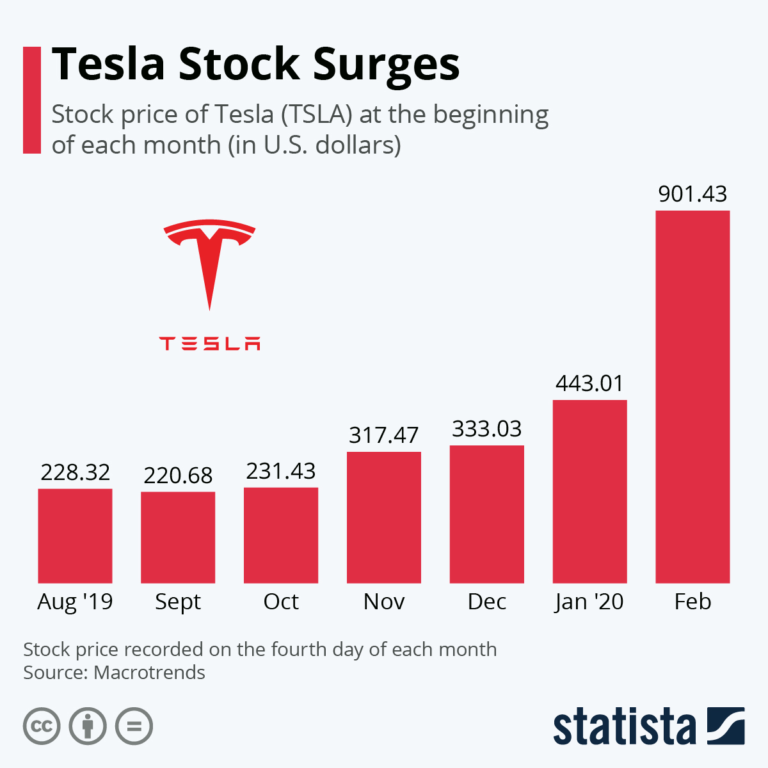
Tesla is one of the greatest stock stories ever told. Early believers didn’t just beat the market—they destroyed it. Tesla redefined electric vehicles, reshaped the energy conversation, and became a cultural symbol of innovation itself.
But investing rewards what’s next, not what already happened.
Today, Tesla is no longer an underdog. It’s a global giant facing margin pressure, intense competition, and rising expectations. While Tesla remains influential, the very success that made it legendary now makes it harder to outperform the broader market.
This is why many smart investors are no longer asking, “Is Tesla a good company?”
They’re asking, “What could outperform Tesla from here?”
This article explores seven stocks that—based on growth trajectory, market positioning, and real-world demand—could deliver stronger percentage returns than Tesla over the next several years.
Why Investors Are Comparing Other Stocks to Tesla Now
Tesla has become a benchmark for disruptive growth. When investors compare stocks to Tesla, they’re really asking one question: Which companies are early in the same kind of explosive growth cycle Tesla once had?
Several structural shifts are driving this comparison:
- Tesla’s revenue growth has slowed from hypergrowth levels
- EV competition has intensified globally
- Pricing pressure has compressed margins
- Tesla’s valuation now assumes near-perfect execution
At the same time, new megatrends are accelerating faster than EV adoption once did, particularly artificial intelligence, semiconductor demand, energy infrastructure, and cybersecurity.
Smart investors follow where capital, policy, and demand converge—not where headlines linger.
What “Outperforming Tesla” Actually Means
Outperforming Tesla does not mean replacing it as a household name.
It means:
- Higher percentage stock returns over a defined time horizon
- Faster earnings or revenue growth from a smaller base
- More room for valuation expansion
- Exposure to earlier-stage megatrends
Large companies can still grow—but smaller, strategically positioned companies often grow faster.
1. NVIDIA (NVDA): The Foundation of the AI Economy
NVIDIA is no longer just a chipmaker—it is the infrastructure layer of artificial intelligence.
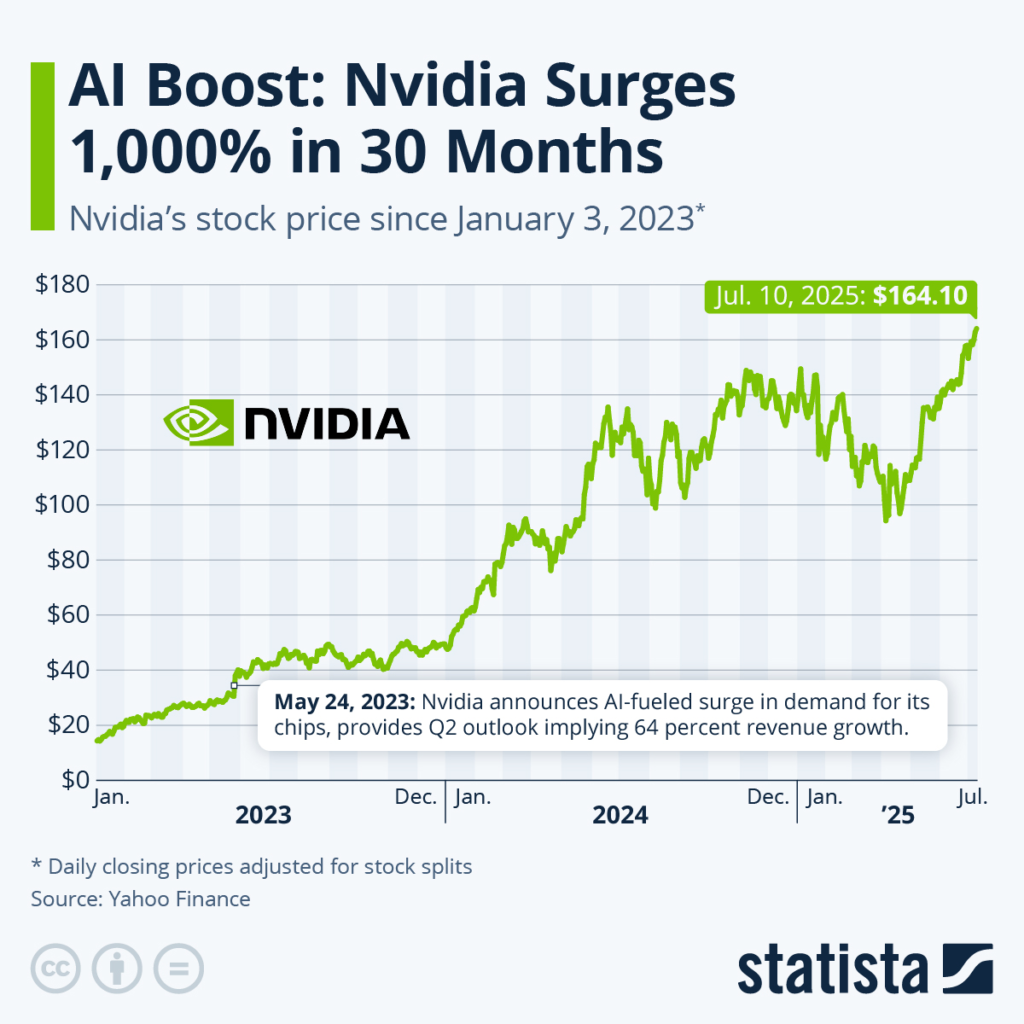
Every major AI system—cloud computing, large language models, autonomous systems—depends on NVIDIA’s GPUs. As AI adoption expands beyond tech giants into healthcare, manufacturing, finance, and defense, NVIDIA’s relevance multiplies.
Why NVIDIA Could Outperform Tesla
- Dominates AI chip market share
- Unmatched pricing power
- Explosive data-center revenue growth
- AI adoption still in early innings
While Tesla relies on consumer purchasing cycles, NVIDIA benefits from enterprise-level capital spending that often accelerates during technological shifts.
2. Broadcom (AVGO): Growth Without the Hype
Broadcom is the opposite of flashy—and that’s exactly why investors love it.
The company supplies critical chips and infrastructure software that power cloud networks, telecom systems, and data centers. Its diversified revenue model reduces dependence on any single trend.
What Makes Broadcom Compelling
- Strong and consistent free cash flow
- Expanding exposure to AI networking
- Reliable dividend growth
- Lower volatility than most tech peers
Broadcom proves that you don’t need hype to outperform—you need execution.
3. NextEra Energy (NEE): Owning the Future of Power
Tesla disrupted energy storage. NextEra controls energy production.
As electrification increases—EVs, AI data centers, smart grids—electricity demand continues to rise. NextEra is the largest renewable energy producer in North America, combining utility stability with clean-energy growth.
Why NextEra Has Long-Term Tailwinds
- Government and corporate decarbonization mandates
- Predictable cash flows from regulated utilities
- Massive renewable energy pipeline
- Strong balance sheet
Energy infrastructure often outperforms flashy innovation during uncertain markets.
4. Advanced Micro Devices (AMD): The Relentless Challenger
AMD’s transformation is one of the greatest comeback stories in tech.
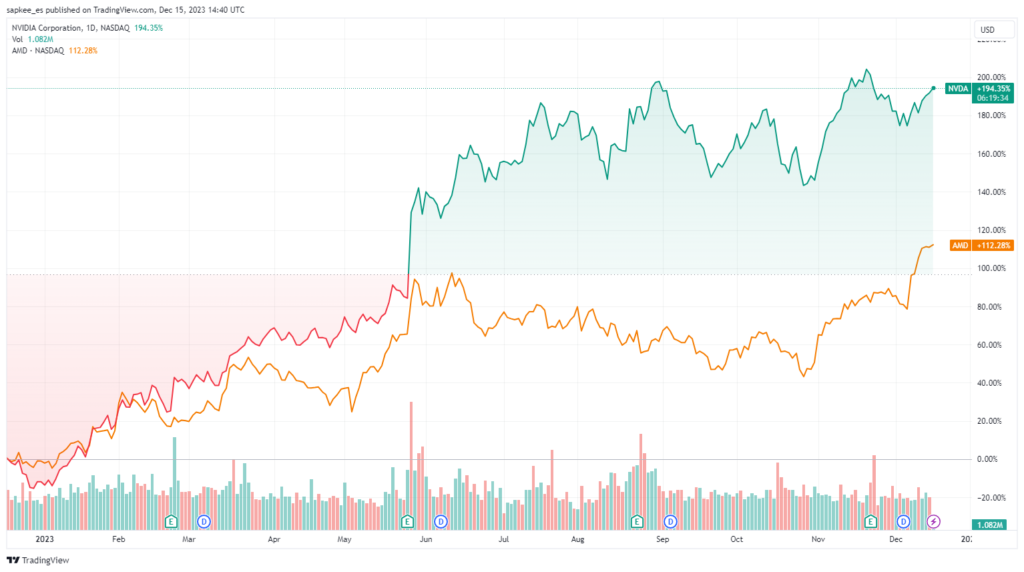
Once dismissed, AMD now competes aggressively in CPUs, GPUs, and data-center chips. It doesn’t need to dominate—it just needs to keep taking market share.
Why AMD Remains Attractive
- Expanding data-center penetration
- Competitive performance-per-dollar
- Strong leadership execution
- Lower valuation relative to peers
AMD’s upside comes from discipline, not disruption.
5. Caterpillar (CAT): The Infrastructure Boom Play
Caterpillar doesn’t trend on social media—but it builds the world.
Global infrastructure spending is accelerating due to reshoring, energy transition, and government investment programs. Roads, power plants, factories, and data centers all require heavy machinery.
Why Caterpillar Could Surprise Investors
- Global infrastructure demand
- Pricing power during inflation
- Strong global brand dominance
- Consistent dividends
Sometimes the most powerful growth comes from real-world necessity, not innovation headlines.
6. Enphase Energy (ENPH): A Smarter Solar Bet
Enphase focuses on microinverters—essential components of residential and commercial solar systems.
Unlike Tesla, Enphase doesn’t manufacture vehicles or batteries. It sells high-margin technology that benefits from global solar adoption.
Key Growth Drivers
- Rising global solar installations
- Expansion beyond the US
- Asset-light business model
- Energy independence trends
Enphase benefits from clean energy demand without the capital intensity Tesla faces.
7. Palo Alto Networks (PANW): Cybersecurity Is No Longer Optional
As digital systems expand, cybersecurity becomes mission-critical.
Palo Alto Networks protects governments, corporations, and infrastructure from increasingly sophisticated cyber threats. Demand for cybersecurity rises regardless of economic cycles.
Why Cybersecurity Is Recession-Resistant
- Recurring subscription revenue
- High switching costs
- Regulatory and compliance tailwinds
- AI-driven security innovation
Tesla sells aspirational products. Cybersecurity protects essential systems.
Real-World Investor Behavior: Rotation, Not Rejection
Many institutional investors aren’t selling Tesla outright—they’re reducing concentration risk.
A common strategy today:
- Trim oversized Tesla exposure
- Reallocate into AI, infrastructure, and cybersecurity
- Maintain growth exposure while improving diversification
This reflects how professionals manage risk: they rotate capital, not abandon markets.
How Everyday Investors Can Use This Insight
You don’t need to pick all seven stocks—or sell Tesla—to benefit from this analysis.
The lesson is broader:
- Markets rotate
- Leadership changes
- Diversification across growth engines matters
Smart Portfolio Takeaways
- Avoid over-concentration in one superstar stock
- Balance hype-driven growth with cash-flow stability
- Invest across multiple megatrends
- Think in multi-year horizons
Common Mistakes Investors Make When Chasing “The Next Tesla”
- Expecting instant returns
- Overpaying for hype
- Ignoring valuation discipline
- Confusing innovation with profitability
Smart investing is not about predicting the future—it’s about positioning for it.
Frequently Asked Questions (Trending US Search Queries)
1. Can these stocks really outperform Tesla?
Ans. Yes. Outperformance refers to higher percentage returns over a specific period, not overall company size.
2. Is Tesla still a good long-term investment?
Ans. Tesla may still grow, but its future returns may be more moderate compared to earlier years.
3. Why are investors rotating away from Tesla?
Ans. Slower growth, rising competition, and high expectations are encouraging diversification.
4. Are AI stocks better investments than EV stocks?
Ans. AI stocks are earlier in their growth cycle, which may offer higher upside potential.
5. Is NVIDIA riskier than Tesla?
Ans. Both carry risk, but NVIDIA benefits from enterprise demand rather than consumer cycles.
6. Should beginners avoid Tesla stock?
Ans. Beginners should focus on diversification rather than avoiding specific companies.
7. Can dividend stocks outperform Tesla?
Ans. In certain market conditions, dividend stocks can outperform on a risk-adjusted basis.
8. How long should these stocks be held?
Ans. These are generally multi-year investment themes, not short-term trades.
9. Are these stocks safer than Tesla?
Ans. Each has different risks; many offer more predictable cash flows.
10. Should I replace Tesla with these stocks?
Ans. Most experts suggest complementing Tesla with other growth areas, not replacing it entirely.
Final Thoughts
Tesla defined the last era of innovation investing. The next era will be broader, more diversified, and driven by multiple megatrends at once—AI, energy, infrastructure, and security.
Investors who understand this shift won’t chase the past.
They’ll position for what comes next.