
As global money moves across borders at record speed, off-shore capital flows are quietly reshaping America’s financial landscape. Once viewed as a niche phenomenon of tax havens, these flows now influence stock valuations, housing bubbles, and even Federal Reserve policy. Here’s what investors, policymakers, and everyday Americans need to know about this invisible financial tide—and why it matters in 2025.
1. What Exactly Are Off-Shore Capital Flows—and Why Do They Matter Now?
Off-shore capital flows refer to the movement of money between countries, often through financial hubs like the Cayman Islands, Singapore, or Luxembourg. While these transactions aren’t inherently illegal, they have a massive impact on liquidity, asset prices, and currency stability.
In 2025, the scale of these movements has reached historic levels.
According to the Bank for International Settlements (BIS), nearly $12 trillion in global capital now resides in off-shore accounts—up from $8.5 trillion just five years ago. Much of this money originates from hedge funds, multinational corporations, and sovereign wealth funds seeking tax efficiency, regulatory shelter, or anonymity.
But here’s the catch:
These funds don’t just sit off-shore—they flow back into the U.S. through investments in stocks, real estate, private equity, and Treasury bonds, profoundly influencing domestic markets.
2. How Off-Shore Money Quietly Shapes the U.S. Economy
Off-shore capital acts like a hidden tide that lifts (or sinks) the U.S. financial system.
For instance:
- Stock Market Impact: Large foreign inflows can inflate equity valuations, masking real domestic demand.
- Real Estate Effects: In cities like New York and Miami, luxury housing prices are heavily driven by foreign shell corporations.
- Corporate Finance: Multinationals often use off-shore cash reserves to repurchase shares or fund mergers, distorting balance sheets and leverage ratios.
- Treasury Markets: A significant portion of U.S. government debt is held by foreign entities operating via off-shore custodians—especially in tax-neutral jurisdictions.
In short, global capital movement can move markets faster than any single Fed decision.
3. The Real Threat: Systemic Fragility Beneath the Surface
The danger isn’t just tax evasion—it’s systemic exposure.
When trillions of dollars are parked off-shore, regulators lose visibility into where risk truly resides.
A striking example came in March 2020, when global liquidity evaporated during the COVID-19 panic.
Analysts later discovered that several off-shore hedge fund vehicles in the Caribbean had over-leveraged positions in U.S. Treasury futures, triggering the so-called “dash for cash.”
Even the Federal Reserve had to step in with emergency funding to stabilize the market.
In essence, hidden leverage in off-shore vehicles creates shadow vulnerabilities that could amplify future crises—especially in a high-interest-rate environment like 2025.
4. Why Are Investors Increasingly Using Off-Shore Channels?
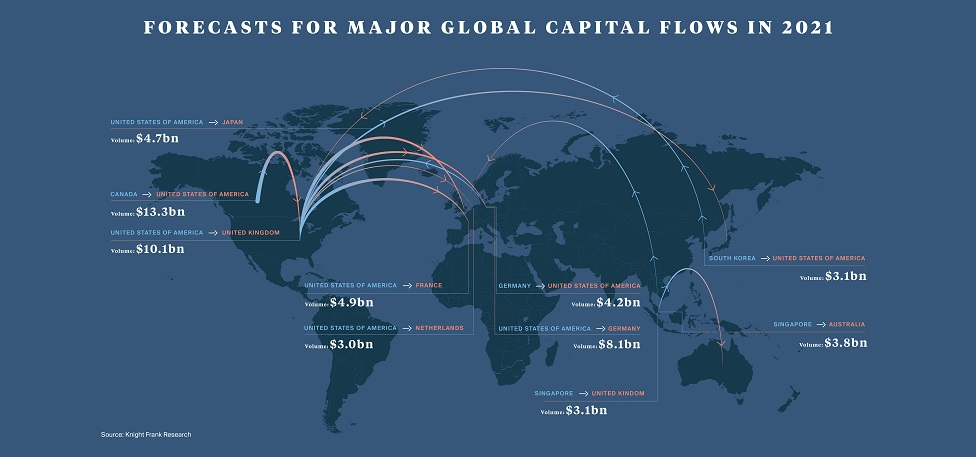
Off-shore capital flows aren’t inherently bad. They offer legitimate benefits:
- Tax efficiency and reduced withholding costs.
- Access to diverse global markets.
- Confidentiality for institutional investors.
- Protection from domestic political or currency instability.
However, as more money escapes regulatory boundaries, it undermines transparency and complicates monetary policy.
Even the IMF has warned that off-shore financial centers can “transmit shocks across borders faster than traditional banking systems.”
5. What the 2025 Data Says About Off-Shore Flows
Recent financial intelligence reports reveal several important trends:
- Rising Asian Influence: Singapore and Hong Kong now rival traditional havens like Switzerland and the Cayman Islands in off-shore fund management.
- Crypto Integration: Around 14% of global off-shore wealth is now held in digital assets or blockchain-based vehicles.
- U.S. Real Estate Surge: Between 2020 and 2024, foreign entities purchased over $53 billion in American real estate, according to the National Association of Realtors.
- Private Equity Expansion: Global PE firms are increasingly setting up off-shore feeder funds to attract non-U.S. investors seeking exposure to American companies.
These numbers underline one truth: off-shore capital is no longer peripheral—it’s central to global finance.
6. Could Off-Shore Capital Trigger the Next U.S. Market Shock?
Possibly.
Imagine a scenario where a major off-shore hedge fund fails—similar to Archegos Capital (2021)—but with ten times the leverage and zero regulatory visibility.
If its positions unwind abruptly, it could send shockwaves through equities, bonds, and derivatives, forcing U.S. institutions to absorb losses they never saw coming.
Moreover, rising global interest rates have made U.S. assets even more attractive, increasing dependence on foreign inflows.
If that tide reverses—say, due to a geopolitical shock or global recession—markets could face a sudden liquidity crunch.
7. How Regulators Are Responding (and Falling Behind)
Regulatory bodies like the Financial Stability Board (FSB), OECD, and U.S. Treasury have launched coordinated efforts to improve transparency:
- The OECD’s Common Reporting Standard (CRS) now mandates information sharing among 100+ jurisdictions.
- The U.S. Corporate Transparency Act (2024) requires disclosure of beneficial ownership for shell entities.
- The SEC is tightening scrutiny on off-shore investment vehicles tied to American funds.
However, enforcement remains inconsistent, especially across jurisdictions with strict banking secrecy laws.
As one former U.S. Treasury official put it:
“You can regulate what you can see—but most of this money remains invisible.”
8. What Investors Should Watch in 2025 and Beyond
Here’s what smart investors are tracking:
- Global liquidity shifts — Monitor how capital flows respond to Fed rate policy.
- Geopolitical flashpoints — Sanctions and trade realignments could redirect off-shore capital overnight.
- Digital assets regulation — Crypto-based off-shore vehicles may be the next big blind spot.
- Emerging markets — Expect new hubs in the UAE, Mauritius, and even parts of Africa.
Investors who understand how these hidden money channels move will gain an edge in forecasting market volatility and identifying risk premiums before the crowd.
9. Real-World Example: When Hidden Money Moves Markets
In 2023, an investigation by the International Consortium of Investigative Journalists (ICIJ) revealed that billions of dollars in Chinese capital flowed into U.S. tech stocks through Singapore-based nominee accounts.
When Beijing tightened capital controls in 2024, those flows reversed abruptly—triggering sell-offs in semiconductor and EV equities.
This example underscores the fragile interdependence between off-shore liquidity and U.S. asset prices.
It’s not just about tax strategy—it’s about market mechanics.
10. Practical Takeaways for Investors
To stay ahead of the curve:
- Track BIS and IMF flow data regularly.
- Diversify exposure beyond assets inflated by foreign capital.
- Favor transparency: Choose funds and platforms that disclose beneficial ownership.
- Hedge geopolitical risk through commodities or inverse ETFs.
- Stay informed: Follow global tax and compliance reforms closely.
In a world where capital knows no borders, understanding where the money comes from may be your best defense against where it suddenly disappears.
Conclusion: The Invisible Hand Behind U.S. Markets
Off-shore capital flows aren’t just a subplot in global finance—they’re the backbone of liquidity and the wildcard of systemic risk.
As digital assets, private funds, and sovereign wealth increasingly intertwine, the next market disruption may not originate in New York or London—but in a quiet office in the Cayman Islands or Singapore.
For policymakers, this is a wake-up call.
For investors, it’s a chance to see what others can’t—and prepare for what’s coming.
Trending FAQs
1. What are off-shore capital flows in simple terms?
They refer to the movement of money between countries through financial centers, often for investment or tax purposes.
2. Are off-shore investments illegal?
No. Most are legal, but they can be used for both legitimate and questionable purposes.
3. How do off-shore funds affect the U.S. economy?
They influence asset prices, currency values, and liquidity—sometimes amplifying bubbles or volatility.
4. Why are companies moving money off-shore?
Mainly for tax optimization, regulatory flexibility, and investment access.
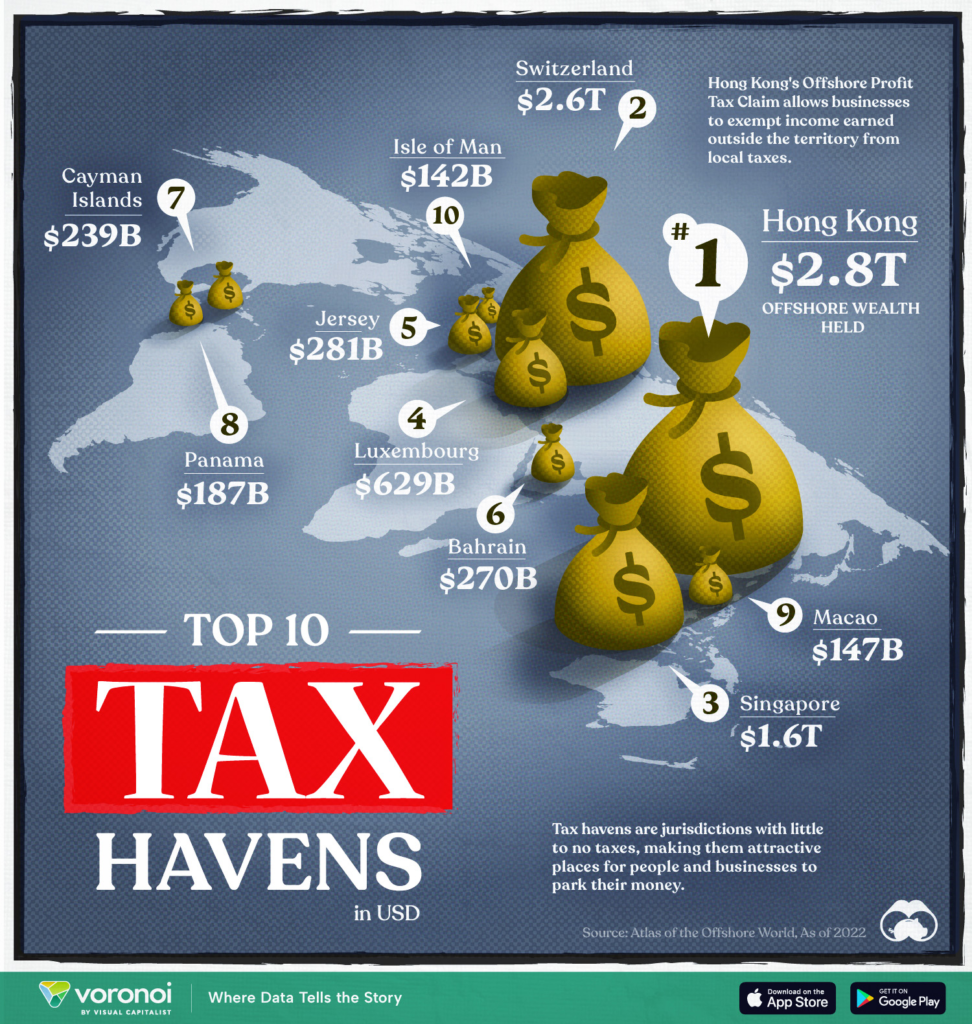
5. Which countries are top off-shore hubs in 2025?
The Cayman Islands, Singapore, Luxembourg, Hong Kong, and the UAE.
6. What role does cryptocurrency play in off-shore finance?
Crypto provides new, semi-anonymous channels for capital movement, complicating regulation.
7. How can investors track off-shore flows?
Through data from BIS, IMF, and SEC filings on foreign holdings.
8. Could off-shore funds trigger another financial crisis?
Yes—especially if leveraged positions unwind rapidly in opaque structures.
9. How is the U.S. government responding?
Via the Corporate Transparency Act and global data-sharing agreements.
10. What’s the best defense for investors?
Stay diversified, avoid over-leveraged assets, and monitor cross-border liquidity trends.