
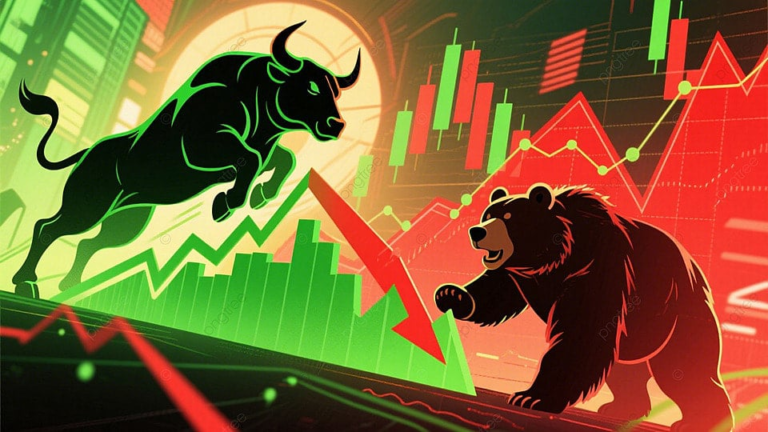
Stock market crashes trigger fear for many investors, but smart investors behave differently. Instead of panic-selling, they stay calm, follow long-term strategies, buy discounted assets, and rely on data over emotion. This in-depth guide explains why markets crash, how seasoned investors respond, and how you can protect — and even grow — your wealth during periods of severe volatility.
Introduction: When Markets Crash, Most People Panic — Smart Investors Don’t
Every few years, financial headlines erupt with panic: “Markets Plunge,” “Investors Lose Billions,” “Recession Fears Rise.” For many Americans, these headlines trigger anxiety and the instinct to pull out immediately. Yet the world’s most successful investors rarely behave this way.
Stock market crashes are not rare events. They are normal, predictable, and — for those who understand them — often profitable.
The difference between someone who loses everything in a downturn and someone who builds wealth is not luck.
It is behavior.
This article breaks down exactly what smart investors do during a market crash, why their reactions differ from average investors, and how you can adopt the same strategies to protect and grow your financial future.
Why Do Stock Markets Crash? A Simple Explanation
Stock markets crash when fear overwhelms logic. This fear is usually sparked by economic shocks, political instability, inflation spikes, interest-rate hikes, or unexpected events like pandemics.
History shows:
- In 2008, the S&P 500 fell 57% before recovering and surging for a decade afterward.
- In 2020, markets fell 34% in just 33 days — then bounced back to all-time highs within months.
- Even the worst crash in modern history, the Great Depression, eventually led to a full recovery and decades of prosperity.
Markets are cyclical. And just like storms, they always pass.
The Emotional Side of Market Crashes
Most investors lose money not because markets crash — but because they react emotionally. Behavioral finance calls this loss aversion: human beings feel the pain of losing money twice as intensely as the pleasure of earning it.
Smart investors overcome this by shifting their mindset:
1. They expect volatility.
Downturns aren’t exceptions; they are features of the stock market.
2. They avoid emotional decision-making.
Instead of checking prices every hour, they focus on long-term goals.
3. They prepare before a crisis happens.
Emergency funds, diversification, and low debt give them confidence during downturns.
This emotional discipline allows them to take actions that average investors are too fearful to take.
What Smart Investors Do When Markets Crash
Below is the proven playbook of seasoned investors during volatility. These strategies are backed by decades of historical market performance, data, and real-world examples.

1. Smart Investors Stick to Their Long-Term Plan
The biggest mistake average investors make during a crash is panic-selling.
Smart investors don’t do this.
Why? Because data shows that trying to time the market almost always leads to underperformance.
A Vanguard study found that 80% of long-term investment growth comes from simply staying invested — especially during downturns.
Real-Life Example:
During the 2020 crash, millions of investors liquidated retirement accounts and locked in losses. Meanwhile, investors who stayed invested saw their portfolios fully recover — and grow — within months.
Patience is not just a virtue; it’s a strategy.
2. Smart Investors Buy While Others Are Selling
Crashes create something rare: high-quality assets selling at bargain prices.
This is why Warren Buffett famously said:
“Be fearful when others are greedy and greedy when others are fearful.”
During downturns, smart investors often buy:
- Blue-chip stocks
- S&P 500 index funds
- Long-term growth companies
- Dividend-paying businesses
- Undervalued high-quality sectors
Real-Life Example:
When Amazon, Apple, and Microsoft fell sharply in 2020, seasoned investors didn’t panic — they bought more. Within months, these stocks rebounded to record highs.
Crashes are temporary. Discounts are temporary.
Long-term gains are not.
3. Smart Investors Rebalance Their Portfolio
A crash disrupts your asset allocation. If stocks fall, they make up a smaller percentage of your portfolio — meaning you now have an opportunity to buy low by rebalancing.
Example:
- Target allocation: 70% stocks / 30% bonds
- After crash: crashes push stocks to 55%
- Smart investor buys stocks to restore 70%
Rebalancing transforms emotional volatility into mathematical opportunity.
4. Smart Investors Strengthen Their Cash Position
A stock market crash highlights how important financial stability is. Smart investors make sure they have enough liquidity so they’re never forced to sell investments at a loss.
They typically:
- Maintain 6–12 months of emergency savings
- Avoid unnecessary debt
- Adjust spending temporarily
- Build a cushion for both life events and opportunities
During crashes, cash isn’t just security — it’s buying power.
5. Smart Investors Study Market History
One major reason smart investors stay calm is simple:
They understand the past.
Here are the facts:
- The S&P 500 has returned about 10% annually for the past 100 years (NYU Stern Data).
- The U.S. stock market has recovered from every crash in history.
- The strongest market rallies often occur right after the worst crashes.
Knowing this makes it easier to stay focused on long-term strategies, not short-term fear.
Practical Steps You Should Take During a Market Crash
Here are actionable strategies — blending paragraph and bullet-point styles — to guide your behavior during downturns:
Immediate steps during the crash:
- Do not panic-sell; selling locks in losses permanently.
- Review your investment goals and risk tolerance.
- Avoid watching fear-driven media coverage nonstop.
- Continue dollar-cost averaging into index funds.
- Consider buying strong companies at discounted valuations.
- Double-check diversification across sectors and asset classes.
- Strengthen your emergency fund to avoid forced selling.
Long-term strategies after the crash:
- Rebalance your portfolio thoughtfully.
- Reassess your risk exposure for future downturns.
- Study sectors that historically rebound faster (e.g., tech, consumer staples).
- Plan for future volatility by building a crash-resistant investment strategy.
- Analyze which companies proved resilient during the downturn.
Market crashes are temporary. Wealth-building is permanent.
10 Frequently Asked Questions About Stock Market Crashes (SEO-Optimized FAQ Section)
1. Should I sell my stocks during a market crash?
No. Selling during a crash locks in losses. Historically, staying invested leads to far higher returns than trying to time the market.
2. How long do market crashes usually last?
Most last from a few weeks to a few years. The recovery, however, almost always lasts much longer and creates significant gains.
3. Is buying stocks during a crash a good idea?
Yes — if you’re buying high-quality assets. Market crashes create discounted buying opportunities for long-term investors.
4. Does every crash lead to a recession?
No. Many crashes (including the 1987 Black Monday crash) were not followed by recessions.
5. Should I stop dollar-cost averaging during a crash?
No. Dollar-cost averaging is most effective during downturns because you buy more shares at lower prices.
6. What sectors perform best during crashes?
Defensive sectors like consumer staples, healthcare, utilities, and some dividend stocks tend to hold up better.
7. How much emergency cash should I keep?
Most experts advise keeping 6–12 months of expenses in an emergency fund to avoid forced selling during downturns.
8. Can the market crash to zero?
No. The U.S. stock market is made of thousands of companies. Even during extreme crashes, the market has always recovered and grown.
9. Are ETFs safer than individual stocks during crashes?
In most cases, yes. ETFs spread risk across multiple companies and track broader market recoveries.
10. Is now a bad time to invest if the market is crashing?
Historically, crashes have been some of the best times to begin investing, as markets rebound and grow over time.
Final Thoughts: Crashes Don’t Destroy Wealth — Panic Does
Stock market crashes are stressful, unpredictable, and emotionally draining. But they are also temporary.
Smart investors understand this, which is why they:
- Stay calm
- Stick to long-term plans
- Buy quality assets on sale
- Rebalance with discipline
- Use history as their compass
If you want to build wealth like an experienced investor, remember:
It’s not the crash that determines your financial success — it’s how you respond to it.