
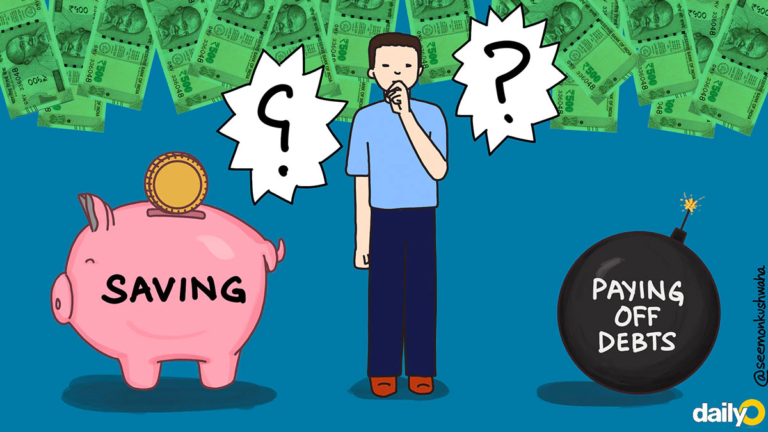
The choice between saving money and paying off debt is one of the most important financial decisions Americans face today. This article explains how to determine which should come first, how to balance both, and how the decision affects long-term stability. With real-life examples, research insights, and practical strategies, this guide helps readers build a path toward financial health, reduced stress, and lasting economic security.
Introduction
For millions of Americans, the debate isn’t whether to save or whether to pay off debt — it’s how to choose between the two when income feels stretched thin. With inflation rising, credit card interest rates at record highs, and the cost of living outpacing wages, the decision has become both urgent and overwhelming. The balance you strike today can determine your financial health for the next decade.
This challenge isn’t simply mathematical. It’s emotional, psychological, and deeply personal. Savings represent safety and peace of mind. Debt represents pressure and obligation. And when both demand attention at the same time, many people freeze — unsure of where to start.
This comprehensive guide breaks down the dilemma using financial principles, real-life examples, and strategic frameworks to help you confidently navigate the savings-versus-debt battle and build long-term stability.
Why Is the Savings vs. Debt Decision So Critical in Today’s Economy?
Today’s financial landscape makes this debate more important than ever. According to the Federal Reserve, total household debt in the United States surpassed $17.5 trillion in 2024, with credit card APRs frequently reaching 20–27%. Meanwhile, the average national savings rate remains below 4%, one of the lowest in years.
This creates a dangerous imbalance:
- High-interest debt eats into future income.
- Low savings leave households vulnerable to emergencies.
- Economic uncertainty increases the need for financial buffers.
- Rising expenses make it harder to build either savings or debt payoff momentum.
Choosing the right priority — at the right time — can drastically improve your financial trajectory.
Should You Prioritize Savings or Paying Off Debt First?
This is one of the most searched financial questions in America, and with good reason. The answer depends on several factors, including your emergency fund, interest rates, stability, and personal psychology.
General expert consensus:
- Start with a small emergency fund.
- Attack high-interest debt aggressively.
- Build long-term savings once stability improves.
This sequence doesn’t just make mathematical sense — it protects you from falling deeper into the debt cycle.
Why You Need an Emergency Fund Before Aggressively Paying Debt
Many people assume they should eliminate debt as fast as possible. But without an emergency buffer, even a small unexpected bill can undo months of progress.
An emergency fund helps you avoid:
- Relying on credit cards during crises
- Taking out new loans
- Overdraft fees and late payments
- Emotional and financial stress
Even a basic $500–$1,000 emergency fund can prevent the most common setbacks.
Real-life example:
Maria, a single mother from Arizona, paid down $6,000 of credit card debt in under a year. But then her car broke down. Without savings, she had to use her credit card — adding another $1,200 at 24% interest.
Months of progress were erased instantly.
Had she saved just $500–$1,000 first, she could have avoided falling backward.
How Do You Decide Which Debt to Tackle First?
There are two proven strategies that financial experts recommend:
1. Debt Avalanche Method (Best for Saving Money)
- Pay off debts with the highest interest rate first.
- Minimizes total interest paid.
2. Debt Snowball Method (Best for Motivation)
- Pay off the smallest debt first.
- Builds confidence through quick wins.
Which strategy is right for you?
- Choose Avalanche if you want the mathematically optimal approach.
- Choose Snowball if you need emotional momentum to stay consistent.
Studies from the Journal of Consumer Research show that snowball users are more likely to stick with debt repayment, even though avalanche saves more money.
Should You Continue Saving for Retirement While in Debt?
Contrary to popular belief, you should not always stop retirement contributions while paying off debt.
Continue saving if:
- Your employer offers a 401(k) match
- Your debt interest rate is below 7–8%
- You have a basic emergency fund
Employer matches are essentially “free money,” and skipping them can cost tens of thousands of dollars long-term.
Real-life example:
Daniel paused his 401(k) contributions for three years to pay off student loans. He later learned he missed out on $12,000 in employer contributions, which would have grown significantly over time.
Debt reduction helped him short-term, but hurt him long-term.
Does High-Interest Debt Destroy Savings Progress?
Definitely. This is why prioritizing high-interest debt payoff is critical.
Comparison example:
- Savings earn: 3–5%
- Credit cards charge: 20–30%
No savings account can compete with the financial drain of high-interest debt. This makes credit card balances a top priority.
How Can You Balance Saving While Paying Off Debt?
You don’t have to choose one or the other exclusively. The key is proportional allocation.
A modified version of the 50/30/20 rule works well for debt-heavy households.
Suggested split:
- 50% toward needs
- 30% toward wants
- 20% toward savings + debt
If debt is overwhelming:
- 10% savings
- 30% debt payments
This allows you to make meaningful progress without sacrificing financial security.
How Psychology Shapes the Savings vs. Debt Battle
Money decisions aren’t always rational. They’re heavily influenced by emotions, habits, and stress responses.
Common emotional pitfalls:
- Guilt → Causes over-saving or under-spending
- Overwhelm → Leads to ignoring debt
- Deprivation → Triggers impulse buying
- Fear → Prevents investing or long-term planning
Understanding your own emotional patterns helps you create a plan that’s sustainable.
Healthier habits include:
- Automating payments and savings
- Setting small, achievable goals
- Celebrating milestones
- Avoiding comparison to others
Financial progress is often more about behavior than income.
What Happens If You Only Save and Don’t Pay Down Debt?
You risk letting debt grow faster than your savings.
Consequences include:
- High interest accumulating
- Lower credit scores
- Higher future borrowing costs
- Reduced financial flexibility
Saving alone cannot compensate for compounding interest.
What Happens If You Only Pay Off Debt and Never Save?
This is just as dangerous.
The risks:
- A single emergency resets your debt
- You rely on credit cards for unexpected expenses
- Your financial life becomes unstable
- You’ll never feel secure
This is why even a starter emergency fund is essential before focusing on debt elimination.
How Do You Know You’re Finally Winning the Savings vs. Debt War?
You’ll notice improvements across your financial life:
- Your credit card balances shrink consistently
- Your savings account grows month after month
- Your credit score improves
- You build a 3–6 month emergency fund
- Financial decisions feel less stressful
Progress doesn’t happen overnight. But over time, the compounding effect becomes undeniable.

10 Frequently Asked Questions About Savings vs. Debt
1. Should I save or pay off debt first?
Build a small emergency fund, then prioritize high-interest debt.
2. How much should I save in an emergency fund?
Start with $500–$1,000, then build to 3–6 months of expenses.
3. Should I stop retirement contributions while in debt?
Not if you receive employer matching contributions.
4. Is saving while in debt a bad idea?
No. Balanced saving prevents financial setbacks.
5. Should credit card debt always come first?
Yes. Its high interest makes it financially damaging.
6. Avalanche vs. Snowball — which is better?
Avalanche saves money; snowball boosts motivation.
7. Can I invest while in debt?
Yes, if your debt is low-interest and your savings are stable.
8. How much debt is too much?
If more than 36% of your income goes to debt payments, it’s considered high.
9. What if I feel overwhelmed and can’t start?
Start small — even $10 weekly builds momentum.
10. How do I know I’m making progress?
Consistency in savings, reduced debt, improved credit score, and less financial stress are key indicators.