
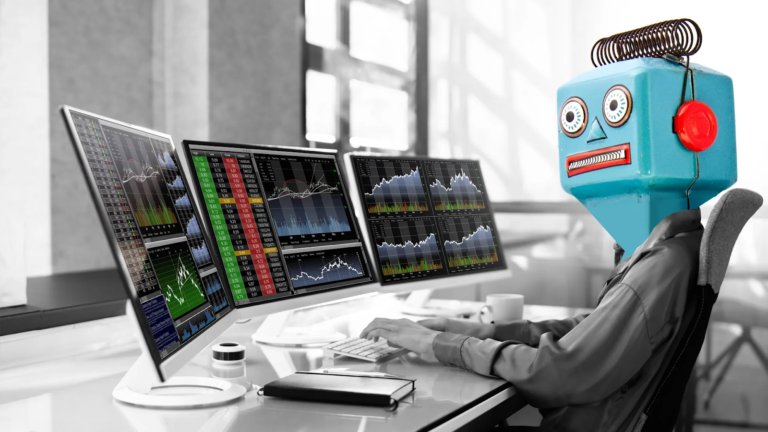
Artificial intelligence is reshaping Wall Street at a speed never seen before, transforming how Americans invest, save, and plan their retirement. From automated trading engines to robo-advisors and predictive analytics, AI is influencing every financial decision that shapes long-term wealth. This in-depth guide breaks down how these rapid shifts affect your retirement savings, what experts recommend doing now, and how to navigate a market driven increasingly by automation.
How AI Is Quietly Taking Over Wall Street — And Why It Matters for Your Retirement
Not long ago, AI was considered a futuristic tool used mostly by tech companies and research labs. Today, it’s the invisible force driving Wall Street’s fastest decisions — from micro-second algorithmic trades to long-term retirement forecasting models. Whether you invest actively or passively, whether you use a robo-advisor or a traditional 401(k), AI is shaping your money’s future.
According to PwC, AI is expected to contribute up to $15.7 trillion to the global economy by 2030, with financial markets being among the earliest and biggest beneficiaries. Meanwhile, major institutions like BlackRock, Goldman Sachs, and Vanguard have integrated machine-learning systems into everything from market predictions to risk analysis.
What does this mean for the average American?
It means your retirement is no longer just influenced by economic conditions, interest rates, or human decisions — it’s influenced by algorithms that never sleep.
Why AI-Driven Algorithms Are Taking Over Modern Investing
Artificial intelligence gives Wall Street a structural advantage through its unmatched ability to:
- Analyze millions of data points per second
- Detect invisible market patterns
- Predict movement before human analysts even react
- Execute trades instantly and without emotion
These capabilities create a completely different type of market environment.
One where speed and prediction matter more than ever.
Real-Life Example
When Nvidia experienced a rapid earnings dip in 2024, many human traders panicked and sold. AI systems, however, simultaneously analyzed more than a dozen data sources — supply chains, consumer sentiment, options flow, insider activity — and identified the dip as temporary.
While retail investors sold off, AI-driven funds bought the drop and profited during the recovery.
This is the new reality of investing. Human emotion is no longer the dominant force — AI-driven logic is.
How AI Is Rewriting the Rules of Retirement Planning
AI isn’t just influencing hedge funds. It’s reshaping the retirement landscape for everyday Americans. Almost every retirement account — from 401(k)s to Roth IRAs — is now touched by automation, even if most investors don’t realize it.
Three Types of AI Now Shaping Your Retirement
1. Robo-Advisors
Platforms like Betterment, Wealthfront, Schwab Intelligent Portfolios, and SoFi have grown into trillion-dollar ecosystems.
They automate:
- Portfolio allocation
- Risk management
- Tax-loss harvesting
- Rebalancing strategies
All without human intervention.
2. Algorithmic Index Analysis
Even your index fund isn’t purely passive anymore.
AI models now assist in determining sector weightings, volatility adjustments, and risk distribution.
3. Pension and Institutional AI Models
Government retirement systems and large pension funds rely heavily on machine-learning models to project returns decades into the future.
A 2024 Deloitte study reported that over 62% of institutional investors use AI forecasting tools to optimize long-term performance.
This means your retirement is increasingly proactive, not reactive.
Markets shift → AI adapts → your portfolio changes automatically.
How AI Helps (and Hurts) the Average Retirement Saver
AI can accelerate your wealth — but it can also introduce new risks.
Benefits
- Higher accuracy in forecasting
- Reduced fees through automation
- Smarter diversification
- Elimination of emotional investing
- Automatic, real-time adjustments
Risks
- Algorithmic feedback loops that cause rapid selloffs
- Overdependence on AI predictions
- Lack of transparency in how AI models make decisions
- Faster market cycles that catch unprepared investors off guard
Real-Life Scenario
In 2023, certain retirement funds dropped over 4% in a single afternoon — not due to economic data, not due to a crisis, but due to algorithmic trading patterns triggering mass selloffs.
Within hours, much of the dip corrected, but many human investors who panicked sold prematurely.
This is the double-edged sword of AI:
Markets react faster, but the speed can amplify volatility.
Americans Are Asking: Should I Still Trust “Set It and Forget It” Retirement Strategies?
The old belief — “Just put money in your 401(k) and ignore the market” — is becoming outdated.
With AI accelerating market cycles, experts warn that passive strategies may need more frequent oversight.
Here are questions millions of Americans now search for online:
- Does AI make the market more volatile?
- Should I switch retirement strategies because of automated trading?
- Are robo-advisors safe for long-term investing?
- Can AI cause another financial crisis?
- How do I protect my savings from AI-driven volatility?
These questions reflect a massive shift in investor psychology.
People want automation — but they also want control.
Does AI Make Markets More Predictable or More Chaotic?
The answer: Both.
AI Improves Predictability When:
- Market cycles follow historical patterns
- Trading volumes are stable
- Economic data aligns with AI model expectations
- Large funds coordinate around similar data inputs
AI Increases Volatility When:
- Algorithms mimic each other
- Markets receive conflicting signals
- Rapid selloffs trigger automated chain reactions
- Global news causes simultaneous AI responses
The Bank for International Settlements found that AI trading amplifies the speed — not necessarily the size — of volatility events.
In other words, swings happen faster, not always deeper.
Should Regular Americans Trust Robo-Advisors With Their Retirement?
For most people, yes — with caution.
Robo-advisors excel at:
- Reducing emotional bias
- Maintaining proper diversification
- Rebalancing automatically
- Lowering management fees
According to Fidelity, robo-managed accounts outperform manually managed ones by 1.2% annually due to disciplined automation.
But the risk is this:
Robo-advisors rely on historical patterns.
If AI changes the market patterns themselves, adjustments may lag.
This is why many planners now recommend a hybrid model — using robo-advisors for execution and human advisors for oversight.
The New Retirement Inequality: AI Users vs. Non-AI Users
People who understand AI-driven investing are already benefiting more than those who don’t.
People benefiting the most:
- Investors using automated retirement platforms
- Workers at companies offering AI-enhanced 401(k)s
- Individuals maintaining consistent contributions during algorithmic dips
People at risk of falling behind:
- Manual stock pickers
- Workers with outdated pension systems
- Investors who panic during AI-triggered volatility
Financial literacy is no longer optional — it’s a requirement.
What You Should Do Now to Protect Your Retirement From AI-Induced Market Shifts
Here are expert-approved actions recommended by financial planners:
1. Reevaluate your risk tolerance every year
AI accelerates cycles — a risk level set five years ago may no longer match your financial reality.
2. Use robo-advisors strategically, not blindly
Automation is powerful, but human oversight is essential.
3. Diversify beyond U.S. stocks
AI clusters information, creating correlated risks.
4. Include inflation-resistant assets
Consider TIPS, commodities, or global bonds.
5. Stay calm during AI-driven corrections
Most algorithmic selloffs reverse quickly.
6. Increase contributions during temporary dips
Automated volatility often creates buying opportunities.
Key Questions to Ask Your Financial Advisor About AI
To stay prepared, ask your advisor:
- “How much of my retirement portfolio is influenced by AI-driven trading?”
- “Are my funds using predictive models, and how reliable are they?”
- “What safeguards protect my account from flash crashes?”
- “How often do we rebalance based on automated triggers?”
- “What strategies do you recommend for AI-related volatility?”
Top 10 FAQs: AI, Wall Street & Your Retirement
1. Will AI cause another stock market crash?
AI can accelerate a crash but doesn’t create one without underlying economic issues.
2. Can AI help my retirement account grow faster?
Yes. Automated rebalancing and tax optimization often boost returns.
3. Are robo-advisors safe long-term?
Yes, they’re regulated and diversified, but should be combined with human oversight.
4. Should I change my retirement plan because of AI?
Adjustments may be necessary depending on age, timeline, and risk profile.
5. Does AI increase market volatility?
It can accelerate volatility, but not always deepen it.
6. Do AI-driven hedge funds outperform traditional funds?
Often yes. Many have outperformed in recent years due to predictive accuracy.
7. How does AI influence bond markets?
AI models adjust bond allocations based on predictive economic cycles.
8. Should retirees worry about AI trading?
Not worry — but remain aware of faster market swings.
9. Will AI replace financial advisors?
No. Hybrid “AI + human” models are becoming standard.
10. Is AI predicting a recession?
Models vary widely. AI forecasts patterns, not certainties.

Conclusion: Your Retirement Future Is Being Written by Algorithms — But You Still Hold the Pen
AI is transforming Wall Street at lightning speed, and retirement planning is evolving with it. But this shift doesn’t have to be intimidating. With awareness, strategic planning, and a mix of human judgment and AI-driven tools, you can harness automation to build a more resilient and prosperous financial future.
Your retirement isn’t becoming less human.
It’s becoming augmented — and that gives you unprecedented power to grow your wealth.