
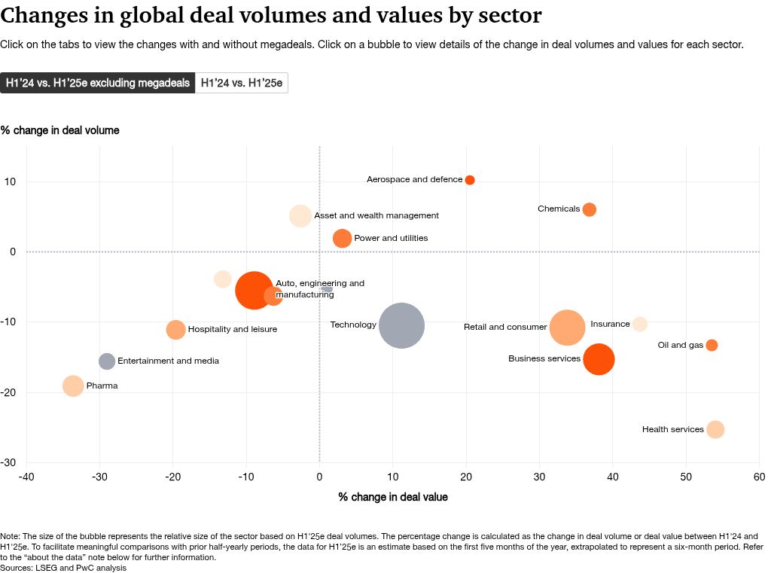
In 2025, global corporate megadeals are reshaping entire industries as tech, energy, and finance giants pursue consolidation to survive high rates and deglobalization. Private equity, sovereign funds, and cross-border mergers are driving record valuations and strategic pivots. This article breaks down the biggest deal themes, hidden risks, and what global insiders are quietly betting on.
Introduction: The Year of Strategic Consolidation
2025 has emerged as a defining year in global finance — a year when corporate megadeals are not just financial events but geopolitical and technological turning points. With global growth slowing, capital tightening, and innovation cycles accelerating, companies are merging or acquiring at unprecedented scales.
From AI-driven data firms to green energy consolidations, the next wave of corporate megadeals is being shaped by three key forces:
- Technological transformation (AI, automation, and quantum computing),
- Geoeconomic fragmentation (the shift from globalization to regional blocs), and
- Monetary tightening (higher interest rates and tighter credit).
Let’s explore how these forces are reshaping the finance landscape — and what insiders are betting on next.
What Defines a “Corporate Megadeal” in 2025?
Traditionally, a megadeal refers to an M&A transaction exceeding $10 billion in value. But in 2025, the definition has evolved beyond size.
Now, megadeals are strategic consolidations that shift the balance of power in entire industries — such as Microsoft’s pursuit of generative AI dominance, or ExxonMobil’s push into carbon capture technology.
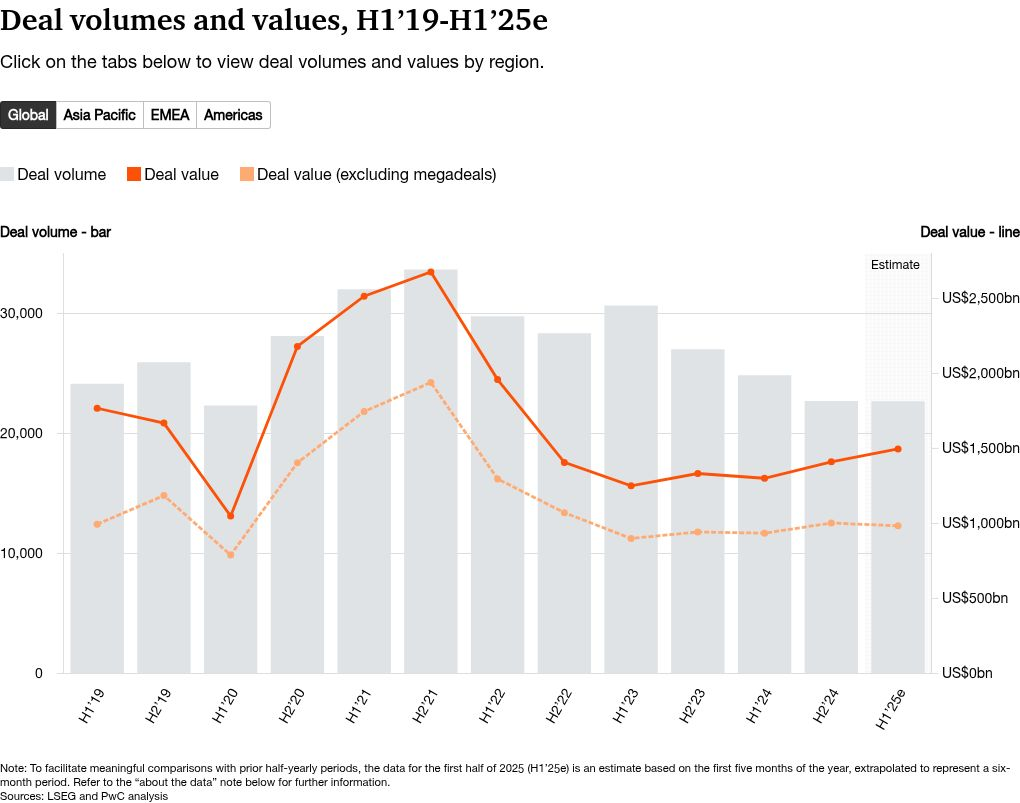
According to McKinsey’s 2025 Global M&A Outlook, over $2.6 trillion in deals have already been announced this year — a rebound driven by AI investments, energy transition plays, and supply chain realignments.
Why 2025 Is the Year of the “Smart Megadeal”
Despite rising rates and tighter liquidity, dealmakers are more active than ever. Why? Because smart acquirers see opportunity amid volatility.
Key Drivers Behind the 2025 Megadeal Surge
- AI Integration: Firms are buying tech capabilities, not just market share.
- Supply Chain Re-localization: Western companies are acquiring domestic suppliers to reduce dependency on Asia.
- ESG and Climate Mandates: Green energy mergers are becoming both profitable and politically strategic.
- Private Capital Abundance: Sovereign wealth funds and private equity firms, sitting on over $3 trillion in dry powder, are fueling megadeals globally.
- Geopolitical Positioning: Governments are encouraging “national champions” to merge in defense, energy, and semiconductors.
As Goldman Sachs puts it, “M&A in 2025 isn’t about expansion—it’s about survival through synergy.”
Sector Spotlight: Where the Big Bets Are Happening
1. Technology & AI
Tech remains the top driver of megadeals. In 2025, the AI consolidation race is fierce:
- Nvidia’s investments in AI software startups.
- Microsoft’s acquisitions of niche generative AI toolmakers.
- Amazon’s strategic AI logistics mergers.
Each move aims to control the data supply chain, from raw processing power to consumer-facing platforms.
2. Energy & Climate Transition
With global net-zero deadlines tightening, energy megadeals are exploding.
- ExxonMobil’s acquisition of Denbury and Chevron’s expansion into carbon capture signal a new “green industrial revolution.”
- BP and Shell are doubling down on renewable joint ventures in Africa and Southeast Asia.
3. Financial Services
Banks are consolidating to cope with digital disruption:
- JPMorgan Chase is quietly acquiring fintech payment networks.
- Goldman Sachs is entering digital asset custody partnerships.
- Private equity giants like Blackstone and KKR are pivoting toward climate and infrastructure funds.
4. Healthcare & Biotech
The pandemic’s aftermath continues to shape biotech megadeals:
- Pfizer, Moderna, and GSK are expanding into mRNA-based therapeutics.
- AI-powered diagnostics startups are being snapped up by legacy pharma firms to modernize R&D.
How Megadeals Are Changing Global Finance Rules
Every megadeal in 2025 sends ripple effects across monetary and fiscal systems.
1. Rising Role of Sovereign Wealth Funds
Sovereign funds from the UAE, Norway, and Singapore are shaping global deal flow.
They now account for over 15% of global M&A funding, according to EY Global Insights 2025.
2. Regulatory Fragmentation
Regulators in the U.S., EU, and China are increasingly wary of monopolies.
Expect longer deal approval timelines, especially in AI and defense sectors.
3. Currency and Capital Flows
De-globalization means cross-border M&A funding faces new FX volatility risks.
Smart dealmakers are using digital asset hedges and sovereign-linked financing vehicles.
Case Studies: The 2025 Megadeals to Watch
- Apple x OpenAI Strategic Alliance (2025) – A multi-billion-dollar collaboration focused on integrating AGI into consumer ecosystems.
- Chevron–BP Renewable Merger Talks – A possible $80 billion green energy juggernaut that could redefine global energy leadership.
- Tencent’s Investment in Indian Fintech – Despite geopolitical restrictions, indirect stake acquisitions are re-emerging via sovereign fund partnerships.
These aren’t just business transactions — they’re geoeconomic chess moves.
What Risks Could Derail These Megadeals?
Even megadeals aren’t immune to risk.
Key Risks:
- Regulatory Pushback: Antitrust scrutiny remains a top obstacle.
- Political Uncertainty: Elections in the U.S. and EU could delay approvals.
- Debt Servicing Costs: Higher interest rates make large acquisitions riskier.
- Cybersecurity Threats: Cross-platform integration expands attack surfaces.
The biggest challenge? Integrating technology and talent cultures post-merger.
What Should Investors Watch Next?
Investors should follow not just who’s buying, but why they’re buying.
Look for:
- Cross-sector synergy plays (like energy + AI).
- Mergers tied to national security priorities.
- Deals with integrated ESG commitments that unlock policy incentives.
- Private equity-backed roll-ups in healthcare and clean tech.
As one Wall Street strategist notes:
“The winners of the next decade won’t just be the companies that grow organically — they’ll be the ones who bought the right assets at the right time.”
Practical Takeaways for Professionals and Investors
- Follow capital flows, not headlines. Mega deals indicate where “smart money” sees the future.
- Analyze deal rationale. Strategic diversification > market share grabs.
- Monitor sector spillovers. A merger in energy could ripple into commodities, shipping, and manufacturing.
- Diversify exposure. Consider ETFs tracking M&A-heavy sectors like AI, renewables, and biotech.
Top Trending FAQs (2025 Edition)
1. What are “megadeals” in finance?
They are mergers or acquisitions exceeding $10 billion in value, often reshaping entire industries or markets.
2. Why are megadeals increasing in 2025 despite high interest rates?
Corporations view consolidation as a strategic hedge against inflation, supply chain risks, and competition.
3. Which sectors are leading the 2025 megadeal trend?
Technology, renewable energy, healthcare, and finance.
4. How do higher interest rates affect M&A deals?
They raise the cost of borrowing, but firms with strong balance sheets can acquire undervalued targets.
5. Are megadeals good for investors?
They can be — if synergy is realized. But overleveraged mergers often destroy shareholder value.
6. How are regulators responding to megadeals?
Antitrust and data privacy reviews are more stringent, especially in tech and defense.
7. What role does AI play in 2025’s megadeals?
AI is both a catalyst and a target — driving acquisitions across nearly every industry.
8. How are private equity and sovereign wealth funds influencing deals?
They are major financiers, using long-term capital to fund strategic consolidations globally.
9. Could geopolitical tensions affect deal flows?
Yes. Cross-border megadeals between rival nations face stricter scrutiny or may be blocked altogether.
10. How can individual investors benefit from megadeal trends?
Through ETFs or funds focused on M&A activity, infrastructure, or innovation-driven sectors.
Conclusion: The Decade of Intelligent Capital
Corporate megadeals in 2025 are not random bursts of greed — they’re strategic survival plays in a volatile, multipolar economy.
From Silicon Valley to Dubai, insiders are betting that bigger, smarter, and greener companies will define the next financial era.
For investors, policymakers, and analysts, one truth is clear: those who understand the logic behind these megadeals today will be the ones shaping wealth tomorrow.