

Millions of American investors are watching their portfolios bleed and don’t understand why. While headlines blame inflation, interest rates, or global instability, the underlying issue is a structural shift in how financial markets behave. This in-depth guide reveals the real reasons behind portfolio losses, the hidden mechanisms Wall Street rarely talks about, and exactly how to protect and grow your wealth.
The Real Reason Your Portfolio Is Losing Money — Even When the Market Looks “Strong”
If your portfolio has been bleeding, shrinking, or stagnating, you are far from alone. Many Americans are experiencing the same unsettling problem:
“The S&P 500 is up.
Tech stocks are booming.
But my portfolio is still losing money. What’s going on?”
The truth is simple but deeply uncomfortable:
The market you see is not the market you’re actually experiencing.
Today’s stock market is more concentrated, more manipulated, more fee-laden, and more algorithm-driven than ever before. And retail investors are absorbing the damage — often without realizing why.
This article breaks down every hidden reason your portfolio may be bleeding and what you can do right now to reverse the trend.
Why Does Your Portfolio Bleed Even When Major Indexes Hit Record Highs?
Because the S&P 500, Dow, and Nasdaq are no longer accurate reflections of the average investor’s performance.
Let’s uncover the hidden forces behind your losses one by one.
1. Market Concentration: The Index Gains You See Are Not the Gains You Get
The S&P 500 is hitting record highs — but almost all the gains come from a tiny handful of giant tech companies.
Data you should know:
Goldman Sachs reports that the top 10 stocks now make up 35%+ of the S&P 500, the highest level in history.
This means:
- If you don’t own enough of those winning few
- Or if you own more of the other 490 stocks…
Your returns lag dramatically behind the index.
Real-life example:
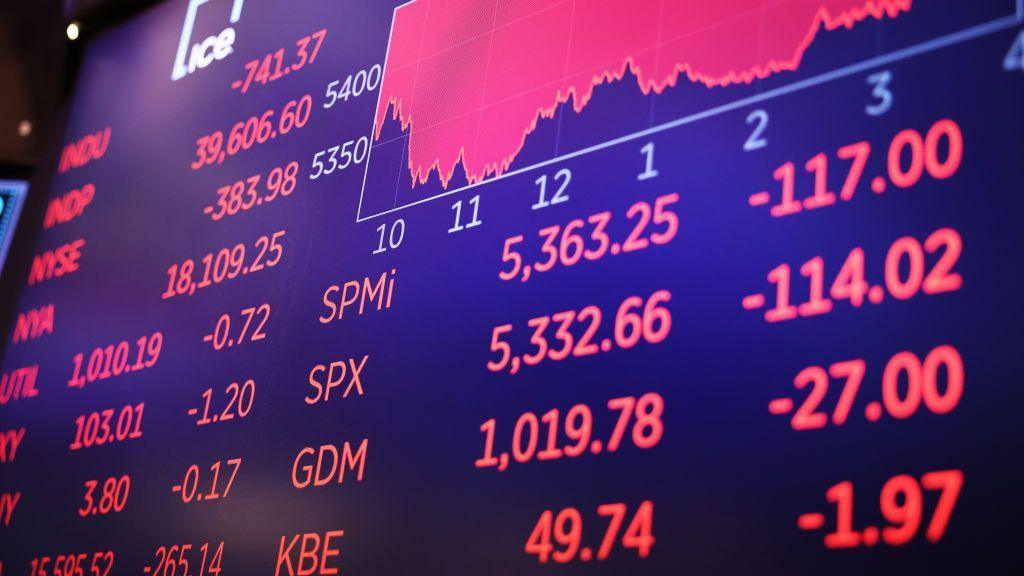
A New Jersey nurse contributed faithfully to her index fund for 7 years.
When she checked her 2024 performance, her portfolio had barely grown — despite the financial news celebrating “historic market highs.”
Why?
Her fund was overweight in sectors like consumer staples and financials, which underperformed — while only a tiny portion was allocated to outperformers like Nvidia, Apple, or Microsoft.
2. Hidden Fees: The Silent Bleeders Wall Street Hopes You Never Notice
Wall Street has mastered the art of hiding fees in plain sight.
You lose money through:
- expense ratios
- advisory fees
- ETF tracking error
- cash drag (cash earning <1% while inflation is 3–5%)
- bid/ask spreads
- automated order routing losses
- margin interest
- “free trading apps” with inflated spreads
Morningstar research shows these frictions can silently cost investors 1.2%–2.8% every year.
That can erase tens of thousands over a decade.
Real-life example:
A Virginia investor had a “free” robo-advisor account.
He didn’t realize that 15% of his balance was sitting in low-yield cash — making almost nothing while inflation ate away his real returns.
He was losing money without making a single losing trade.
3. Rapid Sector Rotation: Wall Street Moves Too Fast for Retail Investors to Keep Up
Wall Street rotates money through sectors faster than the average investor can follow.
When institutions shift billions from:
- tech → energy
- small caps → mega caps
- growth → value
- biotech → industrials
Retail investors often respond weeks too late.
By the time you see the news headline…
the move has already happened.
Real-life example:
In 2023, semiconductor stocks surged.
Most retail traders bought into Nvidia, AMD, and Broadcom only after they climbed 150–300%.
When a correction hit, retail portfolios bled for months — even though the long-term trend remained strong.
4. Algorithmic Trading: Machines Are Moving Prices, Not People
More than 70% of daily trading volume now comes from:
- high-frequency trading (HFT)
- algorithmic arbitrage
- automated dark-pool activity
These systems don’t “invest.”
They exploit micro-price movements at speed retail investors cannot match.
This creates:
- fake breakouts
- flash crashes
- sudden reversals
- price manipulation in low-volume hours
Retail investors are unknowingly trading against machines engineered to win by exploiting every emotional and mechanical mistake humans make.
5. The Behavioral Trap: Emotional Decisions Destroy More Wealth Than Bad Stocks
The biggest enemy in most people’s portfolios is not the market — it’s themselves.
Retail investors consistently:
- buy late (FOMO)
- sell early (panic)
- overtrade during volatility
- follow media hype
- try to time market bottoms
- react impulsively to headlines
The annual DALBAR investor study reveals the average American investor underperforms the S&P 500 by 5.35% per year due to emotional mistakes.
Over 20 years, that gap compounds into hundreds of thousands of dollars lost.
So Why Won’t Wall Street Tell You Any of This?
Because they profit from:
- your panic
- your overtrading
- your confusion
- your advisory fees
- your hidden spreads
- your emotionally driven buying and selling
A misinformed investor is the most profitable customer on Wall Street.
What Are the Most Common Questions Americans Are Asking Right Now?
Top trending investor questions include:
- “Why is my portfolio down even though the market is up?”
- “Why am I not seeing gains when tech stocks are booming?”
- “What is secretly draining my investment returns?”
- “Are hidden fees killing my performance?”
- “Should I sell my losing positions or hold?”
- “Why do my ETFs underperform the S&P 500?”
- “Is algorithmic trading rigged against retail investors?”
- “Why do I always buy at the top?”
- “Should I use a financial advisor or go DIY?”
- “How do I stop my portfolio from bleeding?”
This article is structured to answer all of them clearly and practically.
How Can You Stop Your Portfolio From Bleeding? (Actionable Steps)
You don’t need to overhaul your entire strategy — but you do need to take strategic action.
Here’s what actually works:
1. Rebalance Every 3–6 Months
Trim underperforming sectors.
Boost exposure to market leaders like tech, AI, and semiconductors.
2. Shift Into Low-Fee Index Funds
Fees matter more than stock picking.
3. Stop Chasing Headlines
Media hype is a lagging indicator.
By the time it reaches you, Wall Street has moved on.
4. Use Dollar-Cost Averaging
Consistency >> perfect timing.
5. Keep 10–15% Cash Available
Buy dips with confidence instead of panic.
6. Avoid Excessive Trading
Every trade costs you — even if the app says “free.”
7. Understand Your Hidden Fees
Review all expense ratios and advisor costs.
8. Reduce Concentration Risk
Too much exposure to one company or sector magnifies bleeding.
9. Automate Your Investing
Automation removes emotion — the #1 destroyer of returns.
10. Learn to Sit Tight During Volatility
Sometimes the smartest move is not to move.
Real-Life Stories: Investors Who Lost — And Then Turned It Around
Case Study 1: The Emotional Trader
A Texas engineer bought stocks after they spiked due to media hype.
He lost 28% when the market corrected.
Fix: He switched to long-term investing + automatic contributions.
He recovered and later outperformed his previous strategy.
Case Study 2: The Hidden-Fee Victim
A Florida woman used a commission-free app but didn’t realize inflated spreads were costing her money.
Fix: She moved to a transparent broker and saved thousands annually.
Case Study 3: The Sector-Trapped 401(k) Holder
A Virginia worker unknowingly had 40% of his retirement fund in a poorly performing bond-heavy mutual fund.
Fix: Switching to diversified, low-fee index funds immediately improved performance.
10 Most Relevant and Trending FAQs (SEO-Optimized)
1. Why is my portfolio losing money even when the S&P 500 is up?
Because index gains come from a handful of mega-cap stocks; most sectors lag behind.
2. Are hidden fees really damaging my returns?
Yes. They can silently drain 1–3% per year without you noticing.
3. Should I trust my financial advisor?
Only if their fees align with the value they provide.
4. Is algorithmic trading hurting regular investors?
It creates volatility that retail traders often misinterpret — leading to bad decisions.
5. Why do my mutual funds underperform?
High fees + slow sector rotation make them fall behind index funds.
6. Should I sell my losing positions now?
Not necessarily — evaluate fundamentals, not emotions.
7. How often should I rebalance?
Every 3–6 months or after major market moves.
8. How can I tell if my broker is overcharging me?
Check spreads, advisory fees, cash drag, and expense ratios.
9. Should I hold more cash in volatile markets?
A 10–15% cash cushion is smart; too much cash loses value to inflation.
10. What’s the most important change I can make today?
Simplify, diversify, reduce fees, and commit to long-term discipline.
Final Takeaway: Your Portfolio Is Bleeding by Design — But You Can Stop It
Your portfolio isn’t losing money because you’re bad at investing.
It’s losing money because the modern market is built in a way that quietly extracts value from retail investors.
But once you understand:
- market concentration
- hidden fees
- algorithmic traps
- emotional biases
- sector rotation
You take back power — and your money stops quietly disappearing.
The good news?
You can start fixing your performance today.
Knowledge is your greatest asset.
Consistency is your greatest strategy.
And transparency is your greatest protection.