

The debate between investing in real estate versus the stock market has been intensifying in recent years, especially as Americans search for more stable, predictable ways to build wealth in a volatile economy. Rising interest rates, inflation, housing shortages, tech-driven stock market surges, and shifting job dynamics have all contributed to investors asking the same big question: What’s the best investment for long-term wealth—real estate or stocks?
This comprehensive guide breaks down both asset classes, examines real-life examples, shares expert-backed insights, and answers the most frequently asked questions Americans have today.
Why Are Real Estate and Stocks the Top Wealth-Building Tools in America?
Real estate and stocks dominate investment portfolios because both provide pathways to financial growth. Real estate offers tangible assets, monthly rental income, and potential appreciation. Stocks provide compounding returns, liquidity, diversification, and passive wealth-building. Together, they account for the majority of household wealth in the U.S., according to the Federal Reserve’s 2023 Survey of Consumer Finances.
But while both help build wealth, they operate in entirely different ways—and choosing the wrong one for your financial goals can delay your progress. Understanding what sets them apart is the first step toward choosing the right vehicle for your wealth journey.
Long-Term Returns: Which Asset Performs Better Over Time?
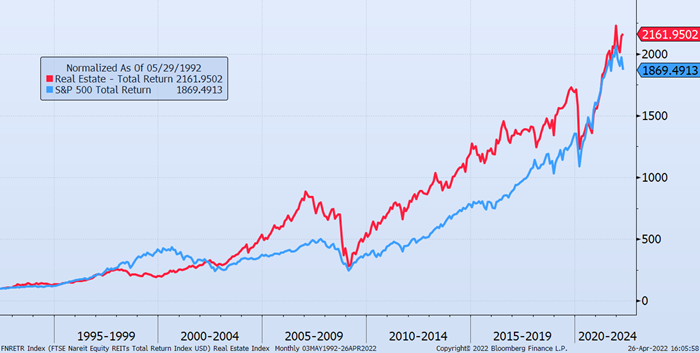
When it comes to long-term returns, the stock market historically wins. The S&P 500 has averaged around 9–10% annual returns for nearly a century, making it one of the strongest performing asset classes in history.
By comparison, residential real estate typically appreciates 3–4% annually, based on Federal Housing Finance Agency data. However, this doesn’t tell the whole story—because real estate offers leverage, allowing investors to use borrowed money to multiply returns.
Real-Life Example:
- $10,000 invested in the S&P 500 in 1990 would now exceed $200,000.
- A home purchased for $79,000 in 1990 could be worth around $430,000 today, plus the owner would benefit from rental income, equity build-up, and tax deductions.
Conclusion: Stocks outperform real estate in pure appreciation, but real estate offers additional layers of wealth-building that amplify returns.
Cash Flow: Can Real Estate or Stocks Generate More Income?
Many investors choose real estate because of its consistent cash flow. Rental properties often provide monthly income that can be reinvested, used for expenses, or saved toward financial independence.
Common Real Estate Cash Flow Sources
- Monthly rental payments
- Additional fees (parking, storage, utilities)
- Appreciation
- Mortgage principal reduction
- Tax benefits that improve net income
Stock investors earn passive income through dividends, but the average yield in the S&P 500 is only 1.5%–2%, which is significantly lower than rental property returns in many markets.
Real-Life Example:
Geoff bought a duplex for $310,000 with 20% down.
- Monthly rent: $2,900
- Monthly expenses: $2,250
Cash flow: $650 per month, or $7,800 annually.
Stocks rarely generate this level of cash flow unless the portfolio is very large.
Passivity: Which Investment Requires the Least Work?
One of the biggest misconceptions in investing is that real estate is passive. While it can be, it often requires far more time and involvement than stocks.
Real Estate Responsibilities:
- Tenant communication and screening
- Maintenance and repairs
- Property taxes and insurance
- Vacancy management
- Legal compliance
- Emergency situations
- Working with contractors
Even with property managers, real estate still requires oversight.
Stocks, on the other hand, are the ultimate passive investment. With index funds or ETFs, investors can automate contributions and let compound interest do the work.
Conclusion: If you want a hands-off investment, stocks are the clear winner.
Risk: Which Investment Carries More Danger?
Both investments come with risks—but the nature of the risk varies significantly.
Real Estate Risks
- Market downturns
- Rising interest rates
- Non-paying tenants
- Property damage
- Natural disasters
- Liquidity challenges
- Unexpected repairs
Stock Market Risks
- Market corrections
- Volatility
- Emotional decision-making
- Company failures
- Inflation
Real-Life Example:
The 2008 housing crash devastated real estate markets, wiping out years of equity. Meanwhile, the 2020 stock market crash saw a 34% decline but rebounded rapidly, hitting all-time highs within months.
Key takeaway: Stocks tend to recover faster from downturns, while real estate tends to be more stable but slower to bounce back.
Taxes: Which Investment Offers Better Tax Advantages?
Real estate offers some of the most powerful tax benefits available to investors.
Real Estate Tax Benefits:
- Mortgage interest deductions
- Depreciation
- 1031 exchange (deferring capital gains)
- Write-offs for repairs, operations, and travel
- Depreciation recapture strategies
Stocks offer tax advantages as well, especially within tax-advantaged accounts like Roth IRAs and 401(k)s, but they don’t offer the same level of tax sheltering that real estate does.
Example:
An investor earning $20,000 in rental income may owe very little tax due to depreciation.
A stock investor earning $20,000 in dividends will owe taxes unless funds are held in a Roth or similar account.
Conclusion: For taxes, real estate wins convincingly.
Which Investment Is Better for Beginners?
Both investments have pros and cons for first-time investors.
Real Estate Is Best for Beginners Who:
- Want hands-on control
- Enjoy managing property
- Prefer physical assets
- Have access to financing
- Are comfortable with maintenance
Stocks Are Best for Beginners Who:
- Want low-cost entry
- Prefer passive investing
- Want easy diversification
- Don’t want debt
- Can emotionally handle volatility
Many investors start with stocks because they are easier and require no debt.
Which Builds Wealth Faster?
The truth is that combining real estate and stocks is the fastest path to wealth for most Americans.
Why Both Is Best:
- Real estate creates cash flow
- Stocks build long-term compounding
- Real estate provides leverage
- Stocks offer liquidity
- You can diversify risk
- Cash flow from rentals can be invested into index funds
Real-Life Example:
Sarah invested in both:
- Her rentals produce $18,000/year in cash flow
- Her index fund portfolio grows 7–8% yearly
- She reinvests all rental income into her investment accounts
She reached financial independence at 41.
Which One Should You Choose in 2025?
Here’s the current landscape:
Real Estate Pros (2025)
- Strong rental demand
- Low housing supply
- Rising rents
- Long-term appreciation
Real Estate Cons
- High interest rates
- Slower liquidity
- Higher entry cost
Stock Market Pros (2025)
- Tech and AI markets surging
- Long-term growth remains strong
- Accessible for beginners
Stock Market Cons
- Volatility
- Inflation pressure
- Emotional decision risks
Most financial advisors recommend a balanced approach that aligns with your risk tolerance, timeline, and wealth goals.
10 Frequently Asked Questions (FAQs)
1. Which is safer: real estate or stocks?
Real estate is more stable; stocks recover faster from downturns. Both carry risks.
2. Which investment grows wealth faster?
Stocks grow faster long-term; real estate grows cash flow and equity.
3. Is real estate a better hedge against inflation?
Yes. Rents and property values often rise with inflation.
4. Can I invest in real estate with little money?
Yes—options include REITs, crowdfunding platforms, or partnerships.
5. Are stocks better for passive income?
Stocks provide passive income through dividends but typically less than rental properties.
6. What’s the biggest risk in real estate?
Tenant issues, property damage, or local market crashes.
7. What’s the biggest risk in stocks?
Emotional investing and market downturns.
8. Is real estate better for taxes?
Yes. Depreciation and tax write-offs give real estate major tax benefits.

9. Should beginners start with stocks or real estate?
Most beginners start with stocks due to low cost and high liquidity.
10. Is it smart to invest in both?
Yes—diversifying across both spreads risk and accelerates long-term wealth.
Final Takeaway: Real Estate vs. Stocks—Which Should You Choose?
The debate doesn’t have a single winner. Instead:
- Choose real estate if you want income, leverage, and tax advantages.
- Choose stocks if you want passive growth, liquidity, and long-term compounding.
- Choose both if you want the strongest possible wealth-building strategy.
Real estate and stocks don’t compete—they complement each other. The smartest investors use both to create a powerful, balanced portfolio that withstands economic uncertainty and creates long-term financial freedom.